The missing piece is that “maximum absorbable load” is not a fixed ceiling that exists independently of fueling. Fueling is one of the things that determines where that ceiling sits.
If you deliberately reduce carbohydrate availability, the same external workload can become more expensive internally. RPE rises, glycogen restoration slows, quality can fall, and the next session may cost more to complete. So if you are already near the limit of what you can recover from, doing everything low carb does not necessarily make that load more productive. It may simply lower the amount of training you can actually absorb.
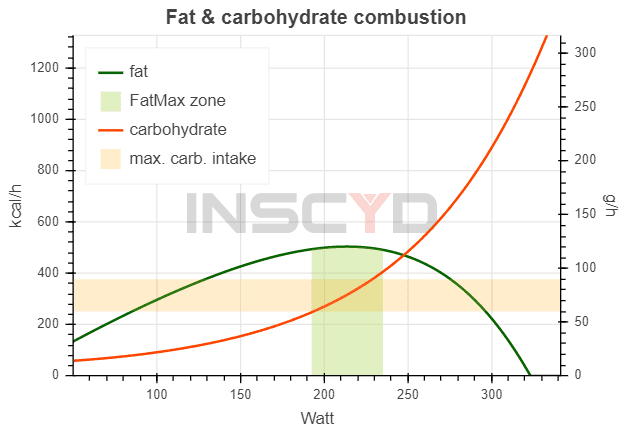
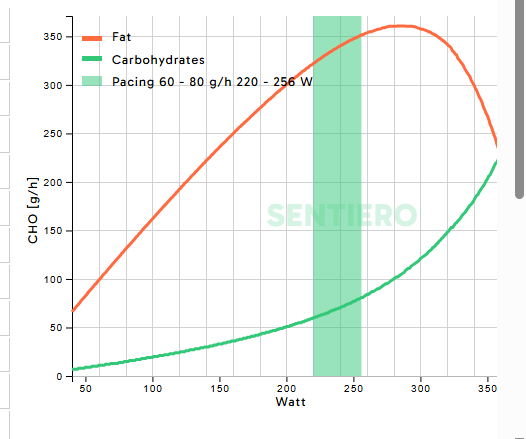
I also would not make FatMax power the end goal. High fat oxidation is very useful in an endurance cyclist, but the really useful phenotype is metabolic flexibility. You want to oxidize a lot of fat while the pace is economical, preserve carbohydrate where you can, and then be extremely good at using carbohydrate when the pace goes up. Fat simply cannot provide ATP quickly enough for the harder parts of cycling, and carbohydrate gives you more usable energy for a given amount of oxygen.
There is also a distinction between burning fat during a ride and developing the adaptations that make you a better endurance athlete. Yes, eating carbohydrate suppresses fat oxidation during that particular session. But that does not mean the aerobic adaptations from the training disappear. Conversely, training with low glycogen can amplify some of the signaling associated with oxidative adaptation, but more signaling is not automatically more performance. Chronic low carbohydrate availability can reduce training quality, high intensity capacity, and recovery.
That is why I think the useful version of the current carbohydrate paradigm gets lost in the debate. It is not really “eat 120 grams an hour whenever you get on a bike.” It is fuel the work required. A short easy ride may need very little carbohydrate. A long endurance day may need enough to stop the second half becoming a survival exercise. Threshold, VO2, and race specific work usually benefit from high carbohydrate availability. Very high intakes make sense when the duration and intensity justify them and the gut has been trained for it.
I would also separate weight loss from this question. Burning more fat during the ride does not automatically mean losing more body fat over time. If the goal is to get lighter, the energy deficit can be created across the day or week without deliberately compromising the sessions that are supposed to drive adaptation.
So if by “high carb paradigm” we mean 120 grams an hour on every training ride, I agree that makes little sense. But if we mean matching carbohydrate availability to the purpose of the session, that is a very different proposition.
The interesting question is probably not “carbs or fat?” It is which sessions actually benefit from low carbohydrate availability, and which sessions are you simply making worse by withholding it?