Might not be 100% training but best place I could think of.
I found a quite recent video about fitting cleats that said the regular ball of the foot position is outdated.
He said you want to slam the cleat back as far as possible (I think for maximum power output) and consequently also lower the saddle a bit.
Everywhere else ball of the foot still seems like the way to go, so I’m curious if there’s indeed a “new way”.
Nothing new. Bike fitters recommend that as a starting position since years. It saves work for the calves to stabilize the foot. And the calves are the weakest point in the chain.
Be aware for toe overlap though! It takes some time to get used too because you need to avoid being in the 3 o clock position at low speed.
I have my cleats set like that for over 5 years. Typically, when applying max force with quads, your calves will suffer less.
At my last bike fit, I asked about cleat position. The fitter turned my shoes over, saw the cleats were “slammed back” and said “that’s probably as good as it gets.”
As it happens she made a minor adjustment laterally to one shoe. I couldn’t tell any difference, but it made something on her screen go from yellow to green.
With bikes decreasing bottom bracket width (triple to compact/double/single) comes a decrease in stance width. Unless you are a pocket climber, you will be more comfortable with a slightly wider stance. Cleats all the way in, to separate the feet a bit more will reduce lateral knee movement which can cause discomfort or even pain in the knees. It has to do with foot pronation. And that can influence saddle interaction.
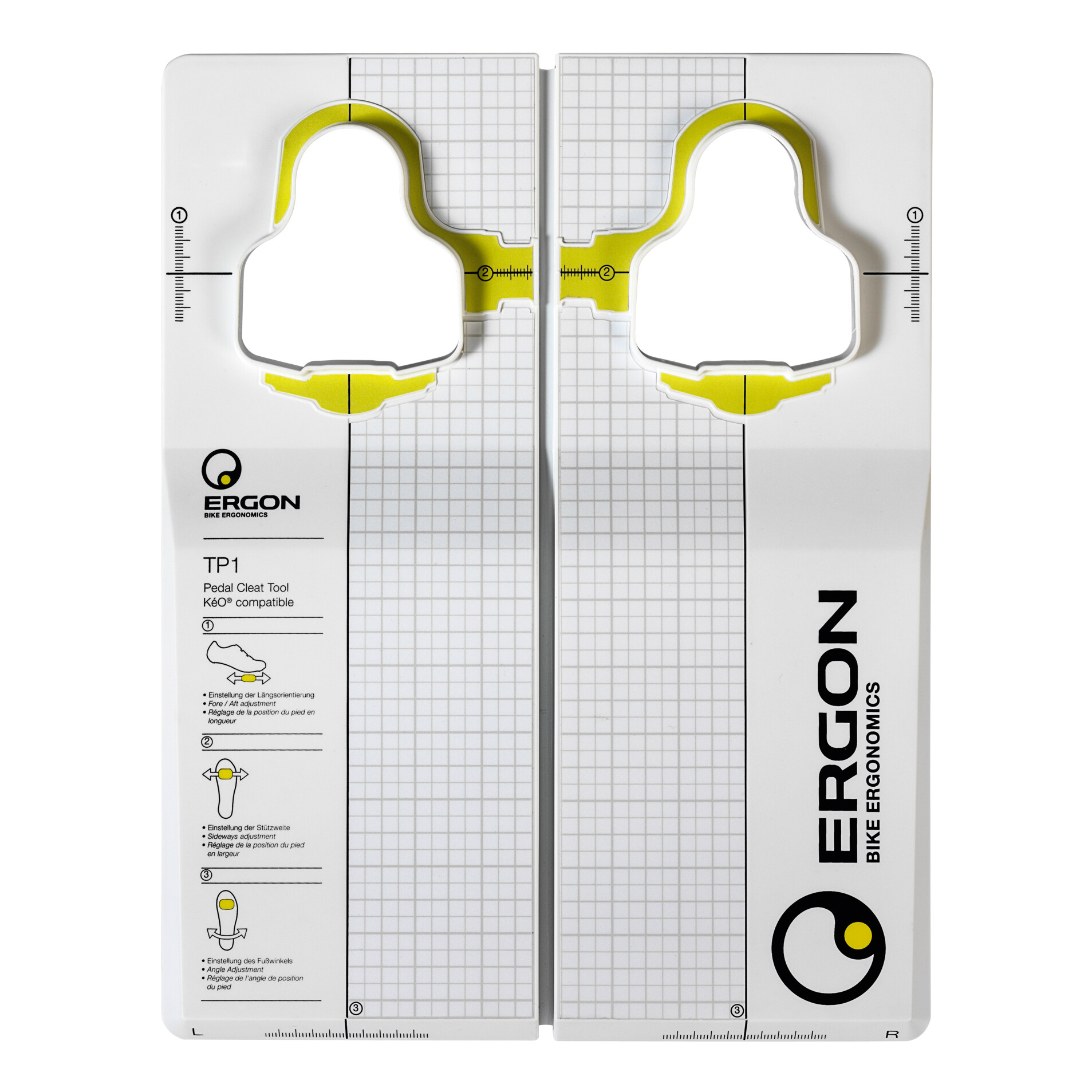
That actually surprises me since every clear positioning video (also the Ergon one) says to find the base of the big toe and base of the little toe and mark that as the point where you want to be.
And that’s how I’ve been setting it up forever.
That’s a myth, just like KOPS. And it sticks…
But nothing holds you to do it like that, just make sure that you’re comfortable on the bike.
Speedplay came with midsole cleats, that’s the whole other end of the spectrum.
IBFI certified bike fitters, all use a more backward cleat position.
I’ve been experimenting with cleat position - i just check what position my feet naturally take on platform pedals and try and replicate it. It’s interesting though, on platforms you can also dynamically adjust depending on terrain and according to Gemini chats changing how far to the left or right you place your feet gives you virtual crank length changes.
I thought that having my cleats in the centre (laterally) was optimal; My left and right cleats aren’t setup in the same position. Right shoe is setup slightly off-centre.
It’s highly unlikely they are dropping you on the hills, because of cleat position.
If the above is a myth, or not, some bike setup guidelines:
don’t compare yourself to others
you are unique and deserve your own setup that optimizes the balance between comfort and power production.
what works for one might not work for someone else.
The various angles your body creates when in the saddle and at the three contact points (hands, bum and feet) matters.
For lateral alignment, I hang both shoes with the back of the cleat from a horizontal rigid ‘ruler’. Then you can easily check if they both have more or less the same inward or outward pointing placement.
If your feet are assymetrical, you need to factor that in.
It depends, mostly on hip width. But you can get an idea by paying attention to feet and knees. If you get pressure on the outside of your feet, it is probably because stance is not sufficient. Your knees want to track as neutral as possible and the correction is done by the feet.
But if your feet collapse inwards, your knees will try to correct for that. Supporting insoles can reduce/eliminate that.
But again, if you are comfortable now, don’t start experimenting. There’s no one truth, bike fitting is an optimisation of comfort and performance. A more performant fit that you can only hold for 30 min, isn’t going to make you any better.
Purely coincidental, this YT video was posted yesterday.
You either like the guy, or you hate him, but I consider him very knowledgeable when it comes to bike fitting. For some, he comes over as a ‘know-it-all’. Plenty of tips on his channel, which, unless you have a severe problem, will help you tune your bike fit yourself.
Slammed my cleats back because of this thread, but today my legs felt like shit.
After about an hour (did 4h total) my legs started to feel like they were getting pinched off around the hip flexors. It became quite painful (4/10), definitely enough to be annoying, and I had to get up and stretch my legs quite often to make it manageable. I also felt like I had to eat a lot more than usual, even though I was only riding in low Z2.
Even as I’m sitting now my legs still feel pinched off/numb-ish around the hips.
I haven’t been able to lower my seat because my seat clamp is busted.
It feels so weird that all this can come from moving the cleats back 2-3mm, but can it?
(on a positive note, my knee pain is a lot less after this ride)
Depending on how much you pointed your toes down before you adjusted the cleats, this can require significant lowering of the saddle!
The cleats being more to the center of the foot, almost completely ignore the toe pointing. making the 2-3mm cleat movement a 10-15 mm change in leg reach.
It was probably not a good idea to try this on 4hr ride…
To get an idea on correct saddle height, get on a trainer, have someone make a mark on the 2 bony points above your hips on your back, and then film yourself from the back. When drawing a line through those 2 marks, the line should be fairly stable and horizontal. If it wobbles all the time, you are rocking your hips to accommodate for an excessive saddle height. And that can be the cause of the pinching.
Filming form the side will reveal if your knees keep some extension reserve iso being completely extended at the bottom.
Honestly, small changes on cleats, saddle height, saddle tilt and saddle fore/aft, can have big impacts. Not something you want to change before a long ride. Make small adjustments and do a 30min test ride. And very important: always document your starting position to make sure that you can go back to where you were if things don’t work out as expected.


 )
)