If you mark a threshold test that you’ve done on a Garmin and not used the app as a threshold test ,does the App treat it is one and analyse it?
1 Like
I think so from a previous comment, but I have not tried it yet but will in the next few days as my last test was on March 1st and I’m definitely stronger.
1 Like
So, is anyone using the automatic zone detection to change the zone fields on their head units? Due to having unsatisfactory threshold tests (trainer not using erg mode properly), I’ve just changed the data fields within the tymewear screen on my Garmin to reflect the automatically detected zones from a ride where they made sense to how I felt. It did only mean changing the Endurance and VT1 metrics, but now I should be getting a decent amount of zone 2 rather than masses of zone 1
Results from two running tests after 6 weeks of training.
Test 1: 18.03.26 — conducted on a calibrated treadmill with simultaneous gas analysis and lactate measurement. Laboratory threshold values and Tyme thresholds matched closely, as did training recommendations — priority on VT1 work and VO2 support.
Test 2: 07.05.26 — conducted on a running track without lactate, simultaneously on Garmin watch and Tyme app.
After that, I completed a 6-week training block with two key tempo sessions around LT1 (mostly something like 4x15 at 5:00), and everything else was easy running at the bottom of zone 2 or top of zone 1. Ventilation was the key metric. Sometimes my pace was 4:50–5:10, but sometimes, or even often, it was 5:20–6:10, probably due to accumulated fatigue. I completely ignored heart rate. Training volume was around 10 hours per week total — cycling and running combined.
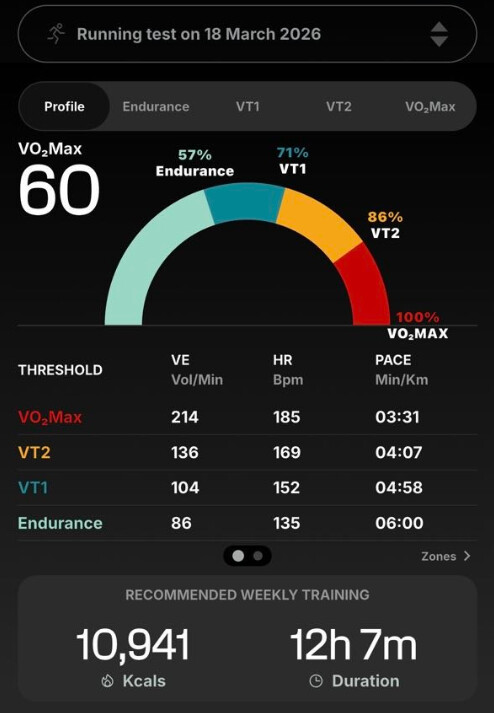
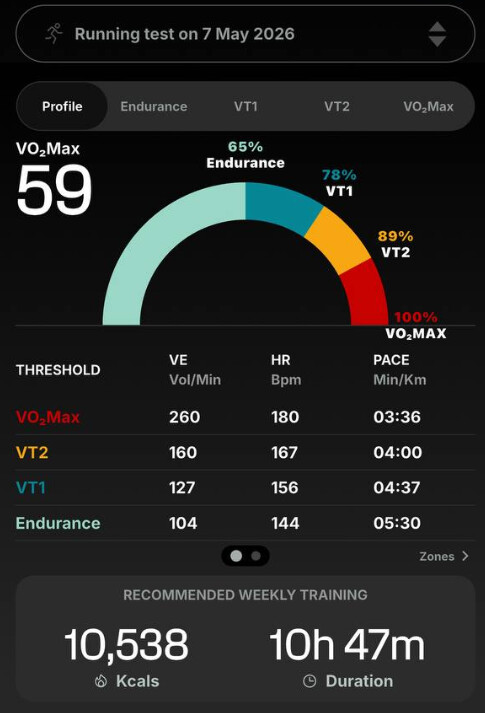
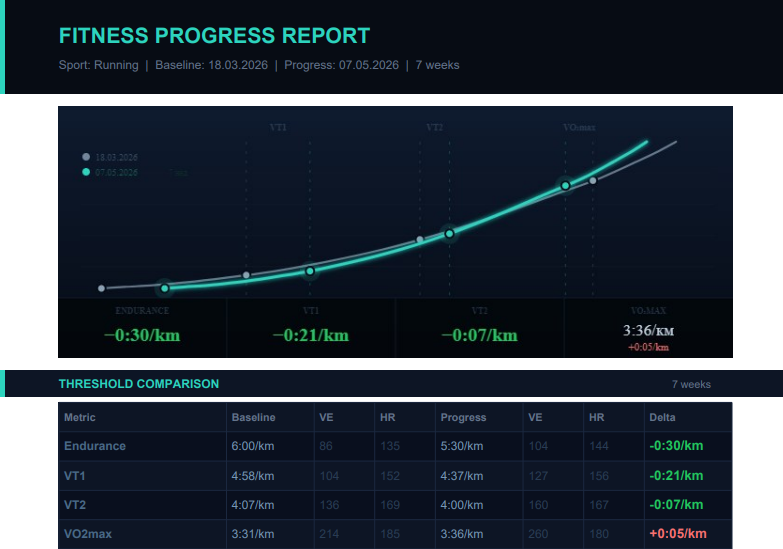
Comparison of the two tests is in the table. I expected improvements, but not this much. Even VT2 improved. VO2 dropped slightly as expected. Overall, I’ve got a balanced profile now, and Tyme’s recommendation is to raise the ceiling with VO2 training to create room for threshold growth.
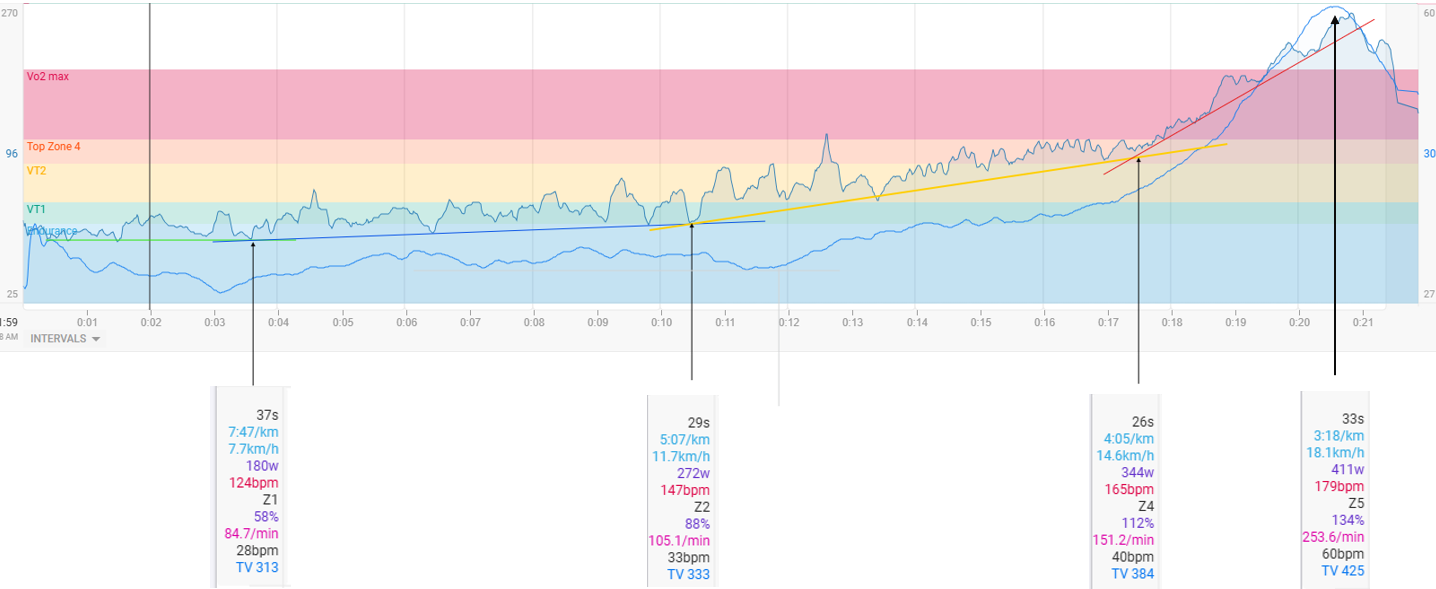
Visual analysis of the ventilation curve shows a very clear inflection point. My pre-report estimate of threshold values around VT2 matched perfectly. VT1 had a small deviation.
I also fed the raw FIT file data to my assistant Claude, who provided nearly identical calculations to the Tyme report. I also use a Stryd sensor to get power metrics for running.
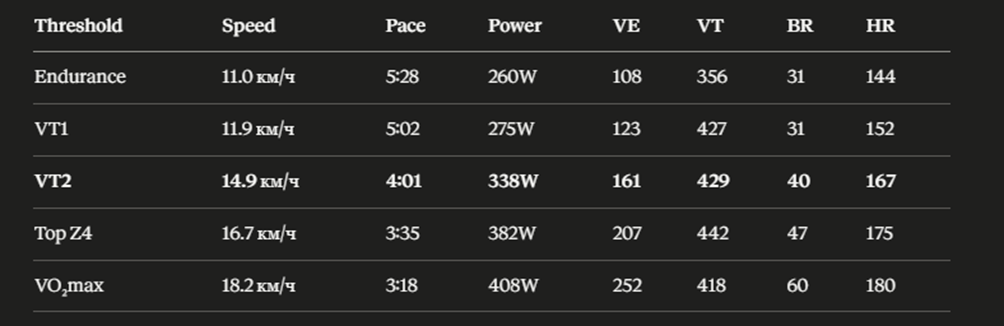
My subjective observations: the threshold pace values from the test are clearly overestimated because they’re from 2-minute steps. I’m not confident my marathon pace will actually be 4:30 — I’d estimate closer to 4:50. But the lactate data and how it felt definitely confirm an improvement in my VT1/LT1 threshold pace.
1 Like