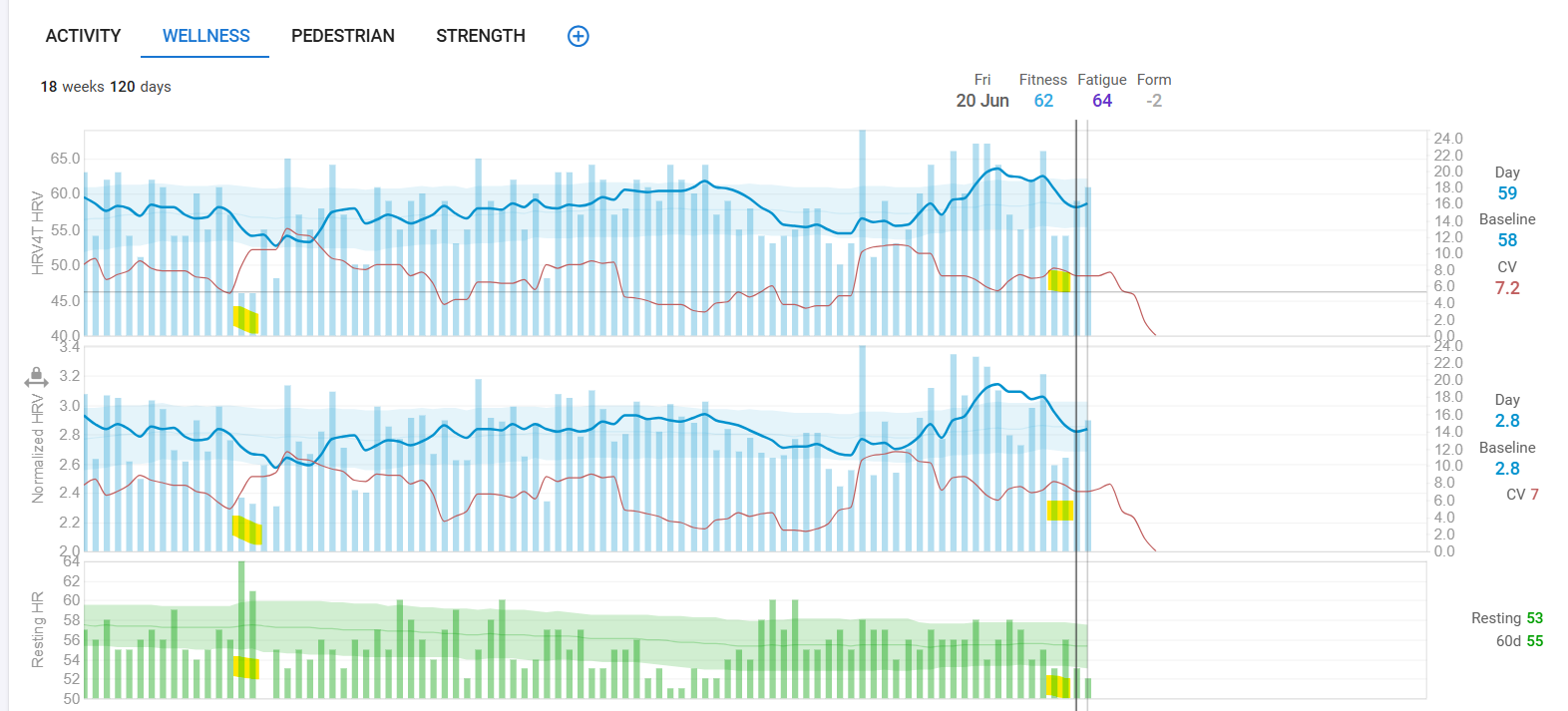
Very interesting! However, I believe the correct and exact formula that matches the values shown in HRV4Training (based on the graph in the article) is: rMSSD divided by AVNN, then multiplied by 100.
Alternatively, if AVNN is unavailable, a good shortcut would be: rMSSD multiplied by heart rate, divided by 60, then divided by 10, or simply rMSSD times HR divided by 600.
This method is more accurate than just using rMSSD divided by HR, because it considers the inverse relationship between heart rate and RR intervals. It provides a more physiologically meaningful normalization, especially when heart rate varies.
rMSSD is the same both days (so actual HRV is unchanged).
HR is lower on day B (better parasympathetic activity).
AVNN is higher on day B (as expected when HR is lower).
rMSSD / AVNN × 100 and rMSSD × HR / 600 drop on day B → This correctly shows that despite more room for variability (lower HR), rMSSD didn’t increase, so relative HRV actually dropped.
rMSSD / HR increases → It gives a false signal that HRV improved, just because HR dropped.
You are 100% correct!
Normalized HRV should be rMSSD divided by ‘mean RR’ during measurement. Be it a with or without a scaling factor, or maybe a natural log of the result as HRV4T uses for its HRV parameter.
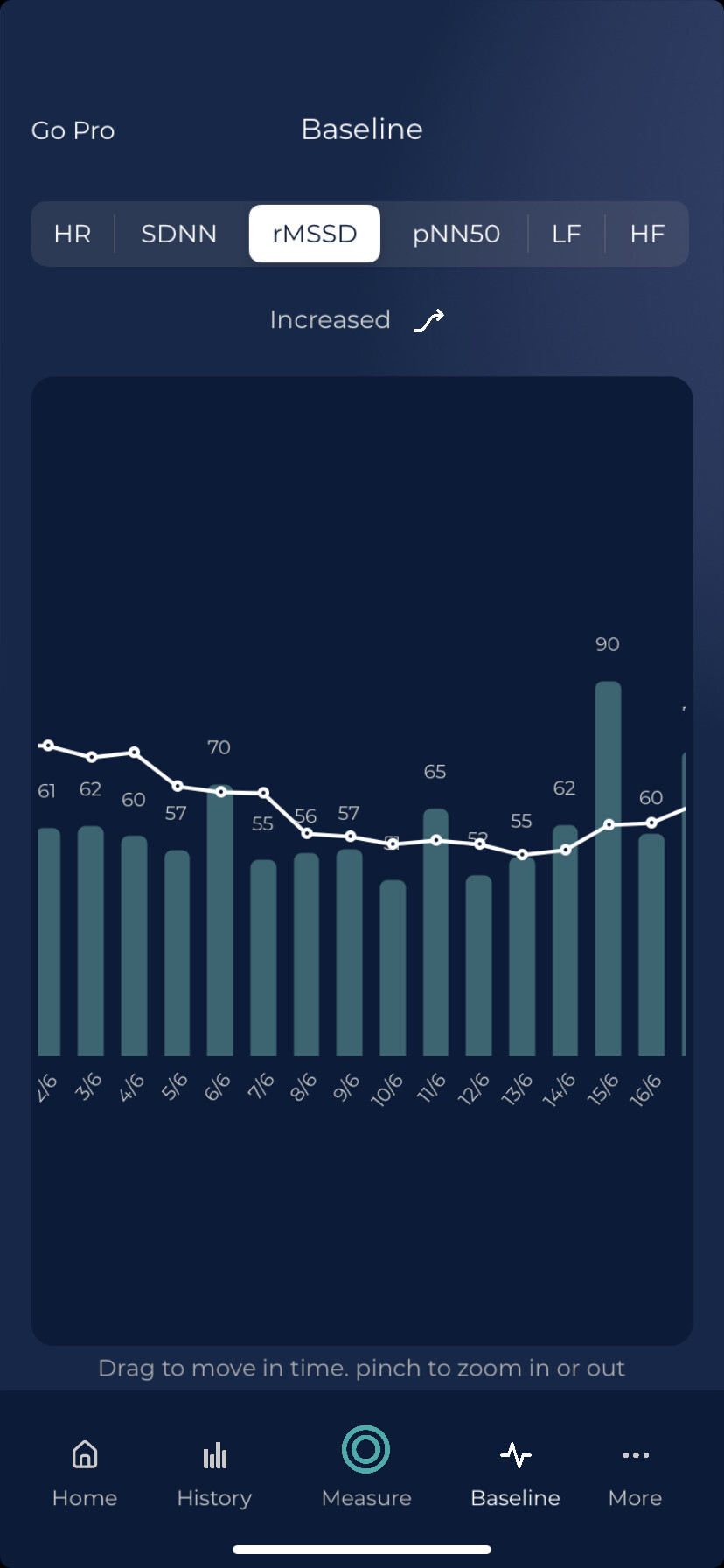
HRV4T displays rMSSD only in the pro version (AFAIK). In the standard version, you get HRV only (and you can’t see rMSSD - correct me if that changed over the last couple of years).
In fact, HRV4T plots HRV as 20*Ln(rMSSD). The natural log compacts the range. If you are not paying attention to CV (Coefficient of variation), it doesn’t really matter because the trend is the same. But when CV is talked about in the literature, they always use a natural log converted value. CV lower then 12% (good stable situation), for the raw rMSSD is totally different compared to the one for the Ln(rMSSD).
Putting this all together, I would think that normalized HRV should be either based on
rMSSD / (mean RR in seconds)
Ln(rMSSD / mean RR) which would result in a compacted range
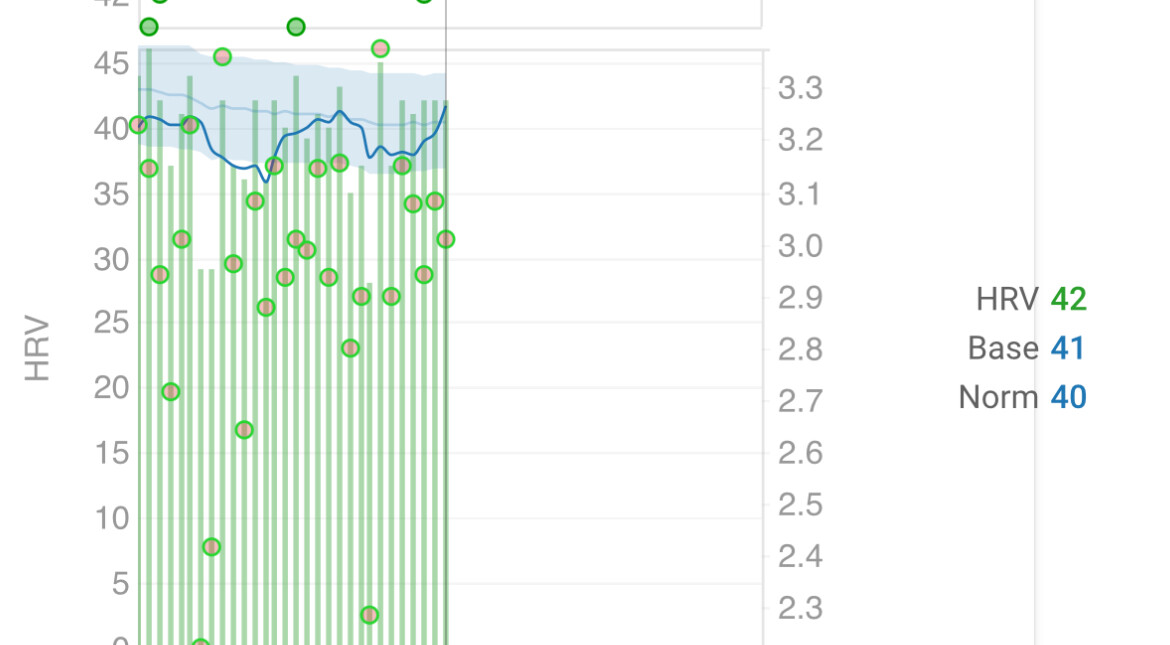
Given the lower numbers in the screenshot from HRV4T, there probably is a multiplier applied, but that is of minor importance. As long as the plot shows the same trend, the absolute value from a multiple or not, is not important.
If someone owns HRV4T PRO, he could verify the above.
I saw @david 's post earlier this week, but haven’t got the time to look at it in more detail until now. If Intervals uses rMSSD/HRrest, then it is as you say, not correct. Will have a play with it later today.
If the user knows what he’s doing, rMSSD * HR / 600 is no problem. But if he takes resting HR, from ‘somewhere’ nothing to do with the rMSSD measurement, this will only show BS.
To be meaningful, the HRrest during the HRV measurement must be used. For those using overnight HRV, I would strongly discourage using this.
I can’t be 100% sure but i would think that the same can apply to SDNN.
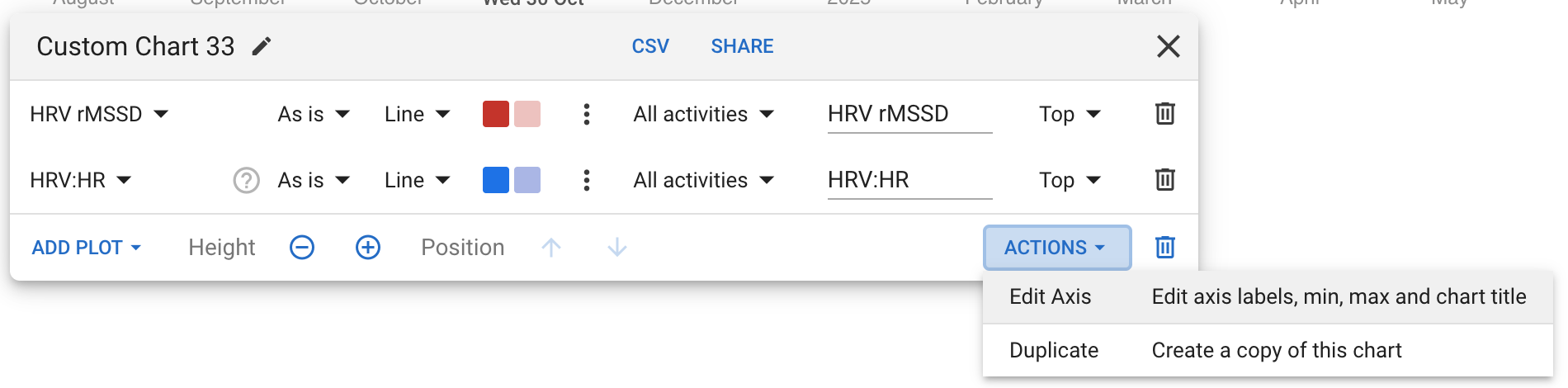
I already implemented my own preferred way to calculate and implement this. Since I use an external tool to daily get the info from the API and send back some calculated stuff in Custom Wellness fields, I just added the normalized HRV to it.
I use HRV and mean RR from Kubios app and take the natural log from the division.
It might be helpful to add a disclaimer emphasizing good practice—namely, that rMSSD and heart rate values should come from the same measurement to ensure accurate calculations.
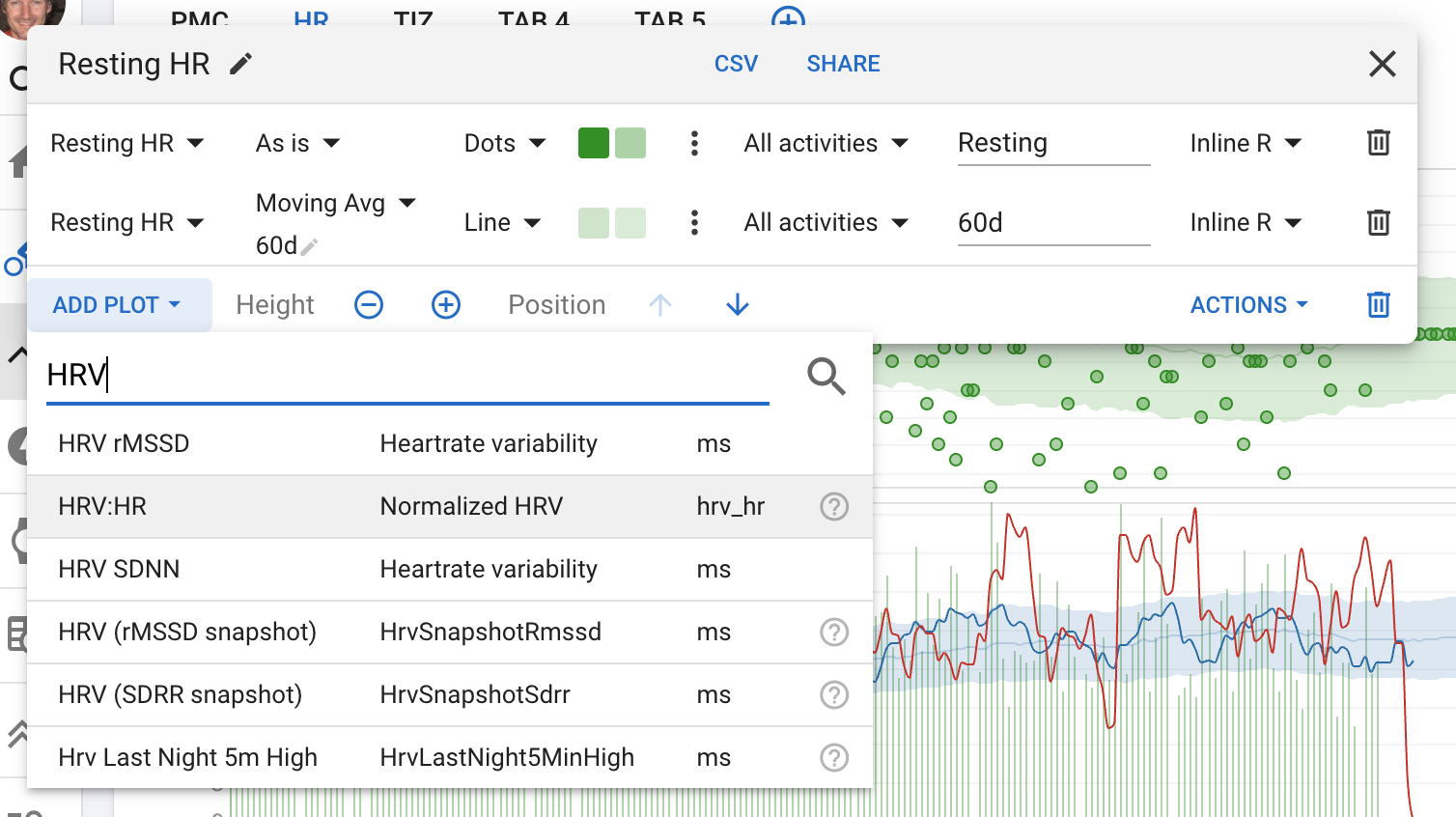
I have added a note to the first post in this thread about that:
NB: Resting HR and rMSSD must come from the same source for this metric to have any validity!
It uses the standard Intervals.icu fields. How these are filled in depends on which device(s) and so on you have connected. If you have connected Marco’s app via Dropbox then those will be the values used.
Marco Altini’s advice to measure HRV in the morning is in a sitting position because of the influence of the baroreflex. Hence HR of that measurement is higher than the usual resting HR in a lying position.
What measurement for HR should therefore be used for the normalized HRV?
Guys, come on. The instructions are perfectly clear.
You use avg HR from the EXACT same time frame as you used for HRV.
And thus only from a morning measurement.
Everything else will flaw the results.
I’m not going to go further in this regarding responses.
 rMSSD / AVNN × 100 and rMSSD × HR / 600 drop on day B → This correctly shows that despite more room for variability (lower HR), rMSSD didn’t increase, so relative HRV actually dropped.
 rMSSD / HR increases → It gives a false signal that HRV improved, just because HR dropped.