I’d like to briefly introduce Spleeft, an app focused on Velocity-Based Training (VBT) for strength training, and share a recent update that may be relevant for Intervals.icu users.
With Spleeft, athletes can measure barbell velocity directly using an iPhone or Apple Watch, or alternatively import VBT data from external devices such as ADREncoder, Vitruve, OVR Velocity, and similar systems. Athlete and coach are connected through iCloud, allowing shared access to the same strength training data without manual file exchange.
What’s new in this update
Intervals.icu integration
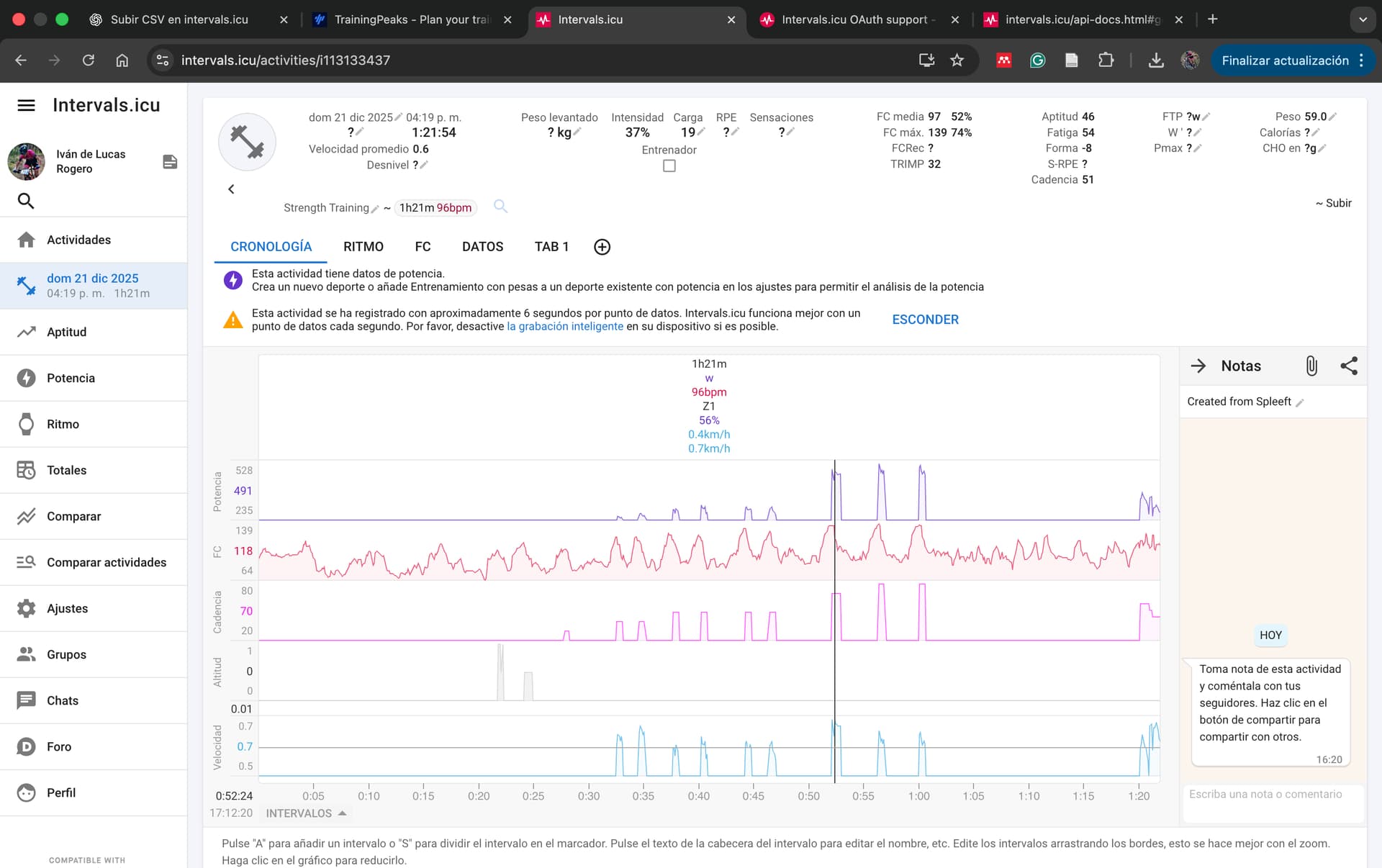
You can now log in with your Intervals.icu account and import your activities into Spleeft.
The idea behind this integration is not to replace Intervals.icu, but to be part of the coach’s normal workflow: quickly reviewing strength and velocity data alongside endurance training data. If something looks unusual, the coach or athlete can then open Spleeft for a deeper, set-by-set VBT analysis.
Why this matters for Intervals.icu users
Many coaches already use Intervals.icu as their central platform to review training data efficiently. Our goal is for strength training and VBT data to live naturally inside that same ecosystem, allowing velocity metrics to be reviewed at a glance, just like any other training signal.
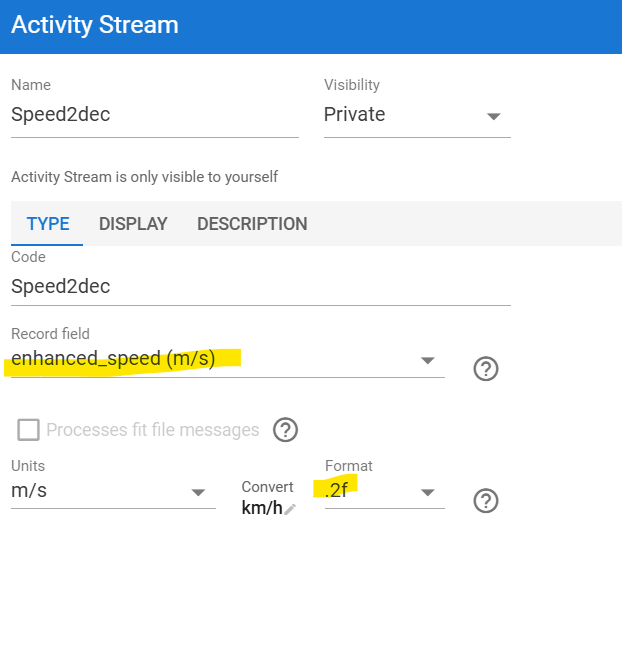
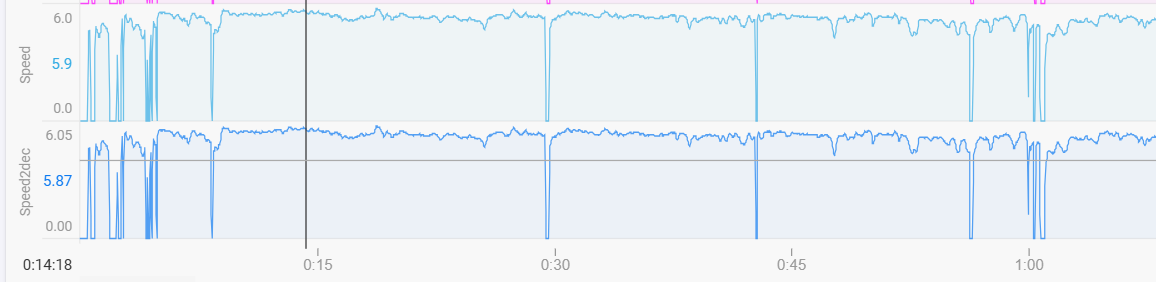
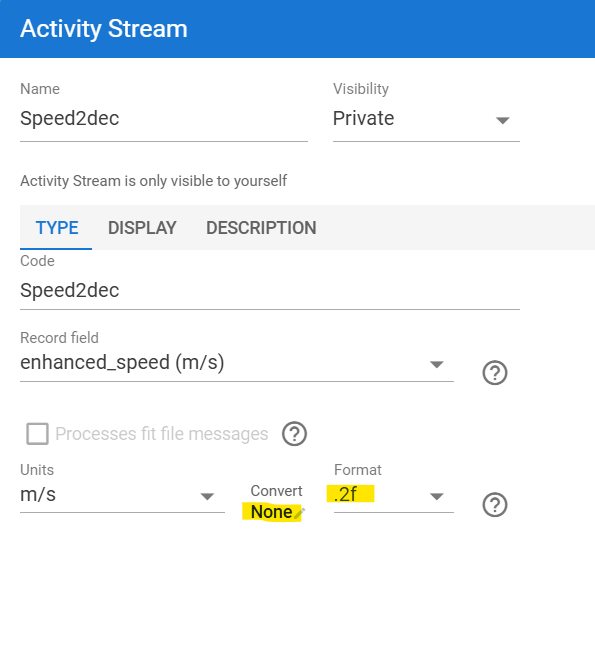
(As a side note, I’m already thinking about asking @david whether displaying velocity with two decimals would be possible, as that would improve quick interpretation.)
What’s coming next
Following this update, our next step is to synchronize planned strength workouts from the Intervals.icu Workout Builder into Spleeft, so athletes can follow their prescribed gym sessions directly in our app while maintaining a seamless data flow back into their usual analysis tools.
If anyone here is working with VBT or structured strength training and has thoughts on workflows, metrics, or integrations, I’d be happy to discuss and get feedback. @Luisma_Gallego_Soy_P is on it!
Spleeft is working really well; I’ve tested it and will give @Ivan_de_Lucas_Rogero feedback soon. I think it’s something that was needed in interval training: the ability to control strength work through speed. I think it’s a great addition to the ecosystem.
Hi Ivan, are you planning to support kettlebell ballistics? Starting with swings. I’ve seen great success using kettlebells and focusing on power (velocity). There is a good thread on using an accelerometer on a kettlebell to estimate velocity and force and power.
For swings:
That thread evolved over time and requires reading thru it.
This one on snatches builds on the previous one, and good summary in first post:
The problem with snatches is any wearable on wrist likely needs to be removed. Or risk crushing by the kettlebell.
Hi! @WindWarrior . Spleeft gives you the mean velocity applied just in the vertical axes. We have test it on machines like the inclined leg press as it is very important for my athletes and results are consistent.
In snatches works fine, you can attach your iPhone or Apple Watch to the barbell.
Currently we are working on optimizing the app for traditional exercises, such squats, deadlifts… maybe in the future we can test that exercises too, as other devices like the Output sensor do.
In my experience as a coach, it is already quite difficult to implement it in traditional barbell exercises. That’s why this is the first step: to at least achieve accessible monitoring of the main exercises.