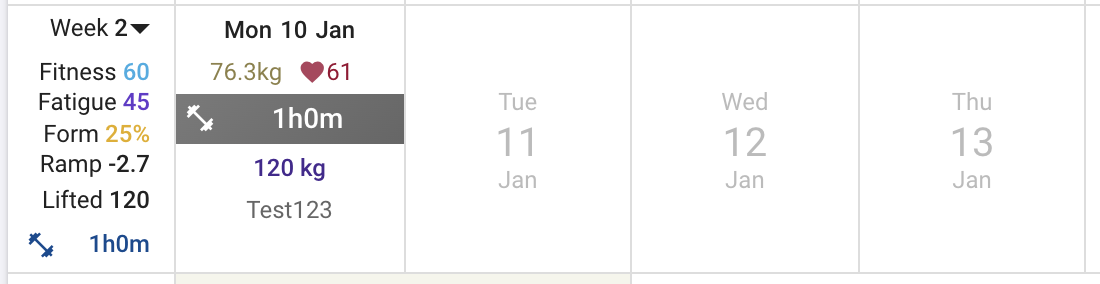
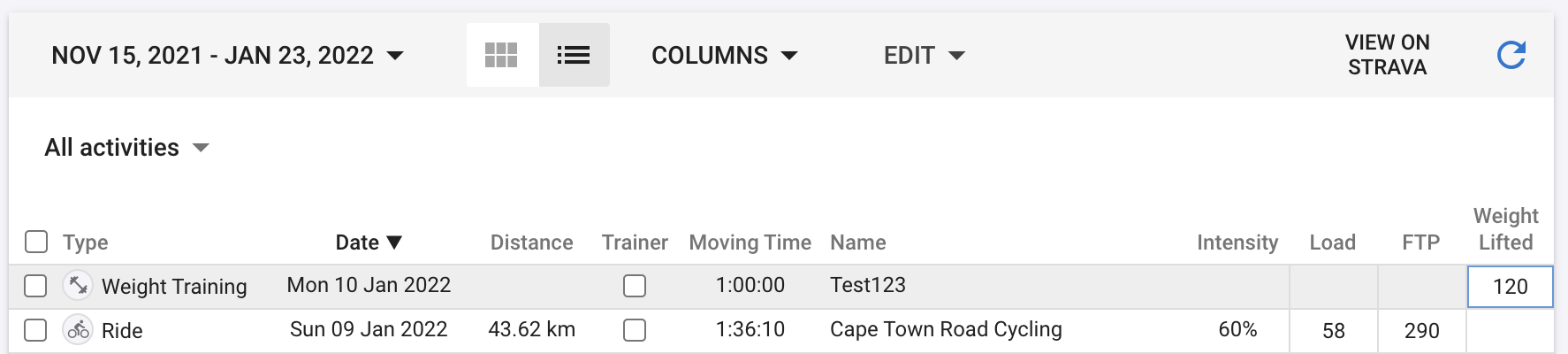
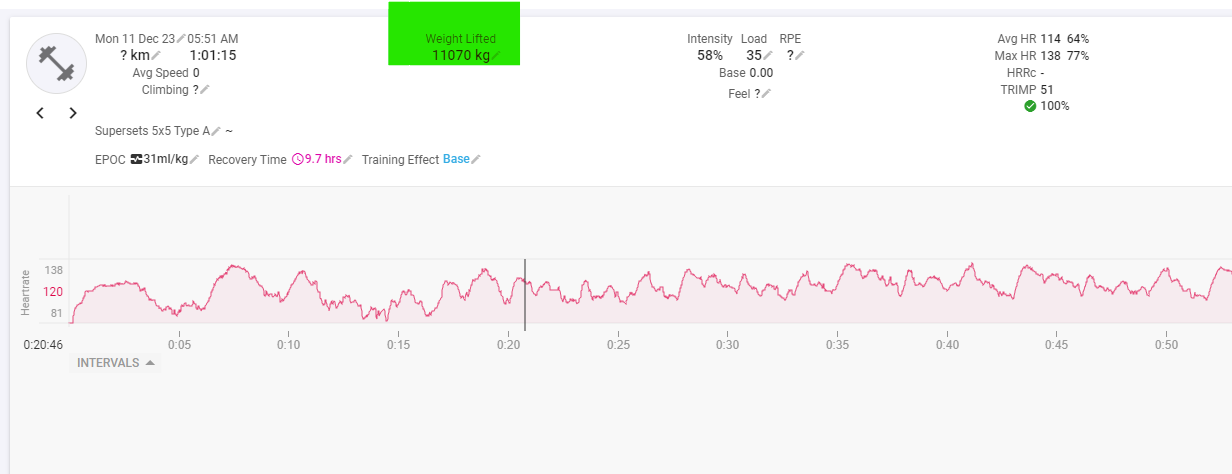
I use FitBod to log strength training sessions. Would like to be able to record ‘kgs lifted’ as a data field for a strength workout and then track totals on a month by month and annual basis. Would also be great if on the calendar view a weight training workout showed the ‘kgs lifted’ along with time spent in the weekly summary ribbon.
How do you estimate the “Load” of the strength training session? I think the HR is probably not sufficient, if you lift very heavy, but the session is not so taxing on the HR. Or do you just use the auto calculated load?
I set it to 70% of HRTSS. Not sure if this makes a lot of sense, however. There are so many different things to consider and the discussions reach from 0% to 100%. So no clear picture here.
Power and olympic lifter and duathlete here (this will change to “triathlete” when I am able to swim more than 50m before collapsing from exhaustion).
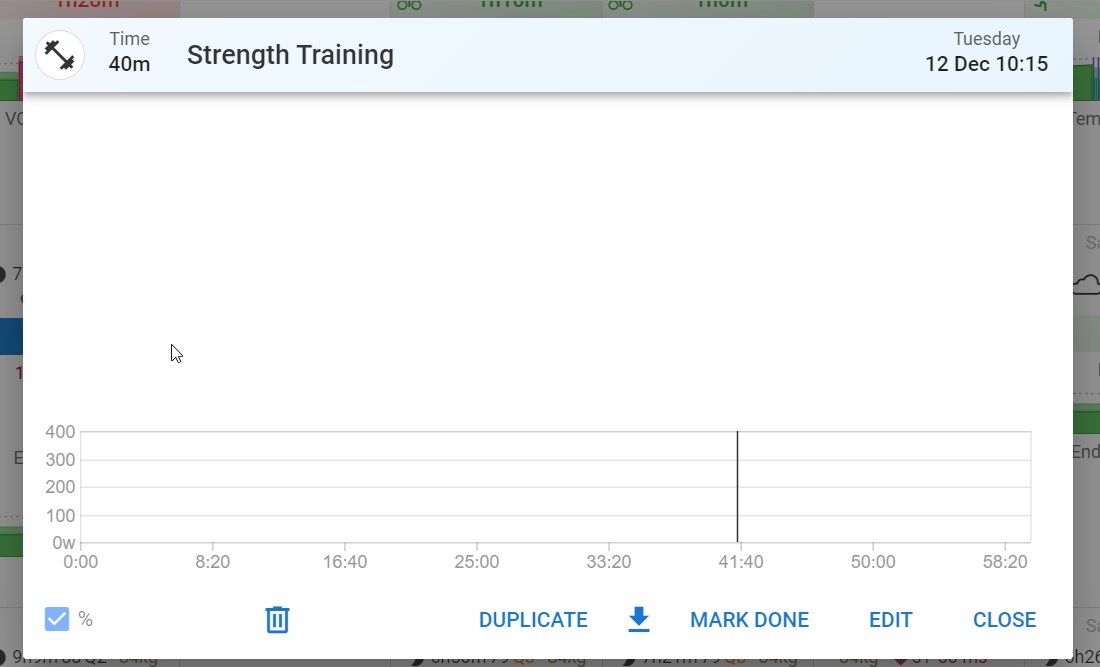
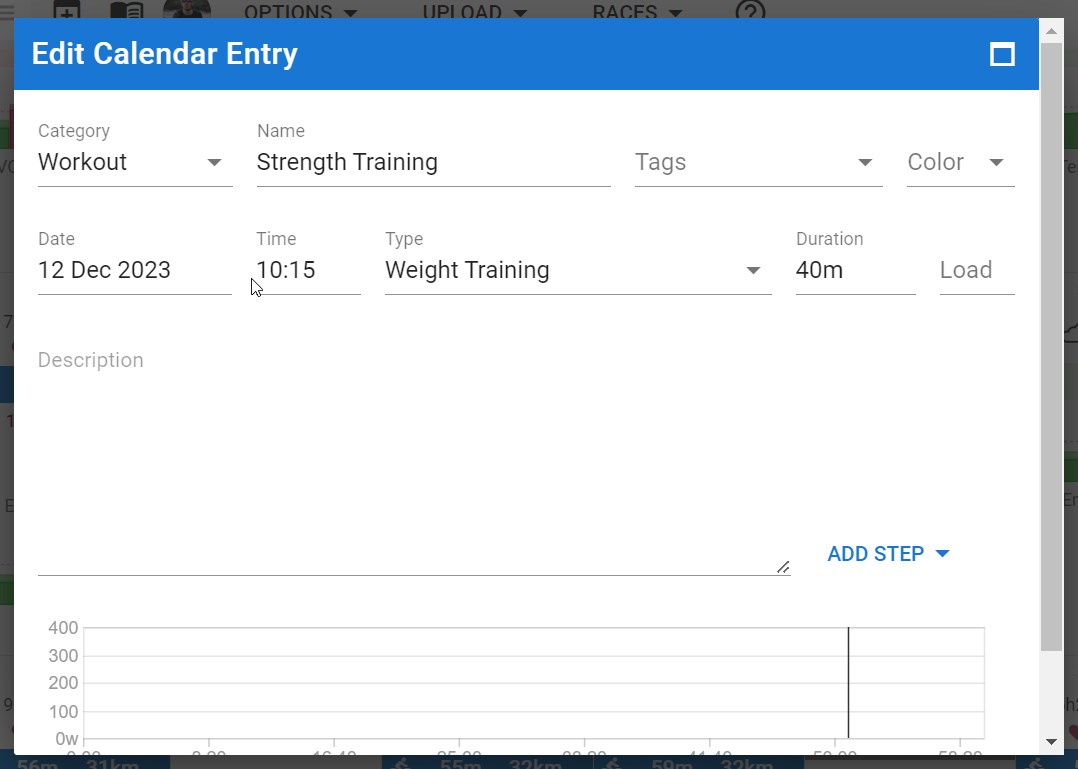
For planned strength workouts, I put in a nominal HRTSS value based on an average of what I’ve seen in previous similar sessions (e.g. I know my snatch session usually has a load of X, my heavy lower session usually has a load of Y, etc. so I’ll put those in). The load metric then becomes an indicator for “was my heart working significantly harder than normal”, which can be a canary for “something might be wrong”, e.g. might be getting ill, doing too much, other life stress impacting training, (watch strap wasn’t tight enough), etc. Otherwise, I don’t pay attention to load for lifting.
For all disciplines, I find tracking RPE and feel significantly more useful than load numbers anyway. I still plan workouts based on training zones, but if a bad night’s sleep makes an easy ride start to feel a bit hard, I’ll back off to maintain the same RPE, rather than drag myself through a slog (because it’s supposed to be easy). RPE takes a while to tune in, but is a valuable tool for monitoring these things. Also very valuable in a race if your tech randomly breaks, as you can still pace yourself using RPE.
@david i think this implementation is meant to convey total weight lifted during a sesson, and implies that a different weightlifting workout is necessary for each exercise, is that correct (100kg of squats is very different from 100kg added to a pull-up, for example)?
as-is, a total weight lifted metric isnt super useful in terms of being able to use that number in any sort of correlation or chart, nor as it might pertain to load - it’s too vague.
it would be pretty nice, for example, to be able to correlate a 1RM squat with peak power output or torque, in order to be able to determine at what point you’re reaching diminishing returns while lifting or vice versa; stuff of that nature
as noted above, relating these workout back to a normalized load metric would be pretty tricky, but i think that formalizing the metric into being more usable would unblock users from being able to expand upon it with custom charts and whatnot, and has higher value as a feature
edit: i can make this into a separate feature request if that makes more sense, lmk