Hi all,
Since the first version of the app, many bugs have been fixed and a lot of improvements have been made. The feedback you shared with me has helped make ICU Coach better with every version.
By now, many of you have tried the app. Some liked it, some felt it still needed more, but I believe it keeps improving with every update.
So I’d like to ask all ICU Coach users to update when the new version becomes available.
The latest version, 4.3.1, has now been published on both stores.
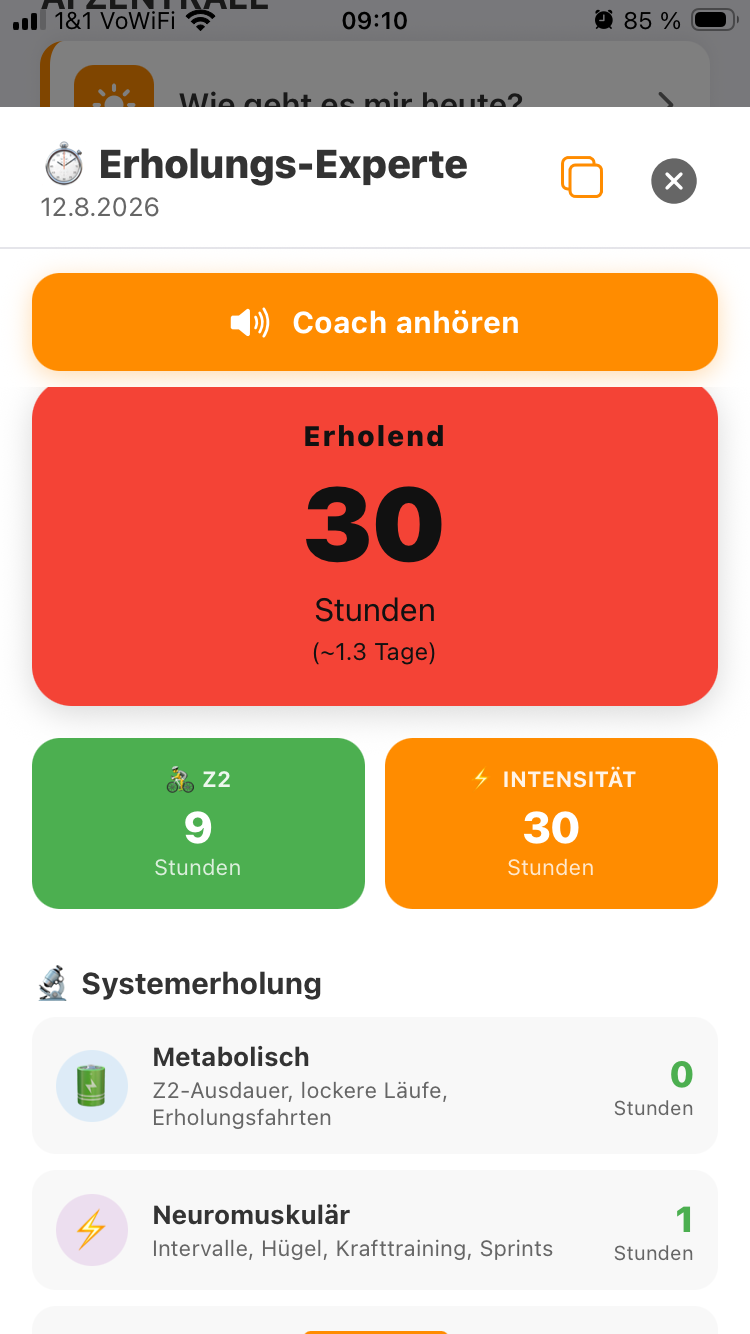
With this version, Italian is working much better, Portuguese has been added, and many user requests and suggestions have been implemented.
Thanks again for all your feedback and support.
Italian
 Pool Swim (9/24/2026)
Questa nuotata ha fatto bene al quadro generale: 47 minuti e 30 secondi gestiti con calma, frequenza cardiaca media sotto controllo e una distribuzione dello sforzo soprattutto nelle zone facili. Per come si presenta la seduta, è un 8.4/10 solido: il carico è stato ben inserito nel tuo momento attuale, hai tenuto il lavoro aerobico come previsto, la nuotata è stata efficiente e il tutto è rimasto coerente con il tuo stato di recupero.
Il giorno prima di questa seduta avevi corso per 45 minuti a intensità 0.84, quindi scegliere oggi un lavoro in acqua più regolare è stato un buon incastro. Anche guardando i giorni precedenti, con corsa e bici già presenti, questa sessione aggiunge lavoro utile senza appesantire troppo. In più, il fatto che due giorni prima avessi fatto una nuotata simile aiuta a leggere continuità più che fatica fuori controllo.
L’unico punto da tenere presente è che c’è ancora un leggero debito di recupero sullo sfondo, anche se oggi il carico è rimasto gestibile. In sintesi: seduta ordinata, utile e ben collocata nel momento.
 Riepilogo:
• Distanza: 2.35km (2,35 km completati)
• Durata: 47:30
• TSS: 37 (Carico moderato)
• Intensità: 0.66 (Seduta aerobica)
• FC media: 135bpm (Frequenza cardiaca controllata)
• FC max: 167bpm (90% della frequenza cardiaca massima)
 Metriche nuoto:
• SWOLF: 88
• Frequenza di bracciata: 27.18/min
• Passo/100m: 2:01/100m
• Lunghezza vasca: 50m
 Distribuzione delle zone:
• Z1: 25:12 (53%)
• Z2: 11:45 (25%)
• Z3: 10:02 (21%)
 Analisi del carico: Fitness 53.2 | Fatica 59.0 | Forma -5.8 | Rapporto di carico 1.11 | Rampa di carico 2.5
 Insight:
- Hai passato il 78% della seduta tra zona facile e zona aerobica, segno di lavoro ben controllato.
- Il tuo cuore ha svolto una quantità di lavoro solida oggi, ma senza trasformare la nuotata in una seduta pesante.
- Se nelle prossime nuotate simili la frequenza cardiaca resterà stabile o scenderà ancora, sarà un segnale di continuità positiva.
Focus principale: È stata una nuotata aerobica ordinata che consolida continuità ed efficienza senza sovraccaricare troppo il sistema.
 Conclusione:
Hai completato una seduta aerobica utile e ben gestita.
Questa sessione ha lavorato soprattutto sulla continuità aerobica in acqua e sull’efficienza della bracciata. In questo momento della preparazione, conta perché aggiunge qualità controllata senza chiedere uno sforzo eccessivo.
C’è un leggero debito di recupero presente e questa seduta ha aggiunto un carico gestibile sopra quel quadro. I segnali indicano recupero parziale leggero, non un affaticamento pesante.
 Cloud AI
Portuguese
Pool Swim (9/24/2026)
Boa sessão de piscina hoje: um trabalho aeróbico bem controlado, com ritmo médio de 2:02/100 m e frequência cardíaca média de 135 bpm, sem sinais de que você tenha forçado além do necessário. O desenho do treino também contou uma história boa, com blocos principais consistentes e um fechamento mais curto, e isso combina com uma leitura geral de sessão estável e bem encaixada. No conjunto, foi um sólido 8.4/10.
O contexto recente ajuda a entender ainda melhor esse treino. No dia anterior a esta sessão houve uma corrida de 45 minutos com intensidade 0.84, e dois dias antes um treino de natação de 50 minutos com intensidade 0.67; então esta entrada na água manteve a sequência sem pesar demais. Seu coração ainda fez uma quantidade significativa de trabalho hoje, mas dentro de uma faixa administrável, e a braçada saiu eficiente para piscina de 50 m.
O ponto principal é simples: foi uma sessão útil, econômica e bem alinhada com o estado atual do corpo.
Resumo:
• Distância: 2.35km (2,35 km concluídos)
• Duração: 47:30
• TSS: 37 (Carga leve a moderada)
• Intensidade: 0.66 (Esforço aeróbico controlado)
• FC média: 135bpm (Frequência cardíaca estável)
• FC máx.: 167bpm (90% da sua FC máxima)
Métricas de natação:
• SWOLF: 88
• Frequência de braçadas: 27.18spm
• Ritmo/100m: 2:01/100m
• Tamanho da piscina: 50m
Distribuição por zonas:
• Z1: 25:12 (53%)
• Z2: 11:45 (25%)
• Z3: 10:02 (21%)
Análise de carga: Fitness 53.2 | Fadiga 59.0 | Forma -5.8 | Razão de carga 1.11 | Progressão de carga 2.5
Insights:
- A maior parte da sessão ficou em Z1 e Z2, o que confirma um estímulo aeróbico bem controlado.
- A frequência cardíaca média caiu em relação à natação parecida de dois dias antes, sugerindo melhor economia para um esforço semelhante.
- Se esse padrão de ritmo com frequência cardíaca mais baixa continuar aparecendo, será um sinal de boa consolidação da forma na água.
Foco principal: Foi um treino de sustentação aeróbica com boa eficiência, e o principal recado é que você encaixou carga útil sem pesar demais.
Conclusão:
Você entregou uma sessão aeróbica limpa e bem controlada.
Este treino trabalhou resistência aeróbica na água com boa economia de braçada e custo cardíaco administrável. Dentro do momento atual da preparação, ele reforça consistência sem criar estresse desnecessário.
O impacto fisiológico parece administrável, mas há uma leve dívida de recuperação e esta sessão somou carga de forma controlada sobre isso. Os sinais agudos mostram recuperação parcial leve neste momento.
Cloud AI
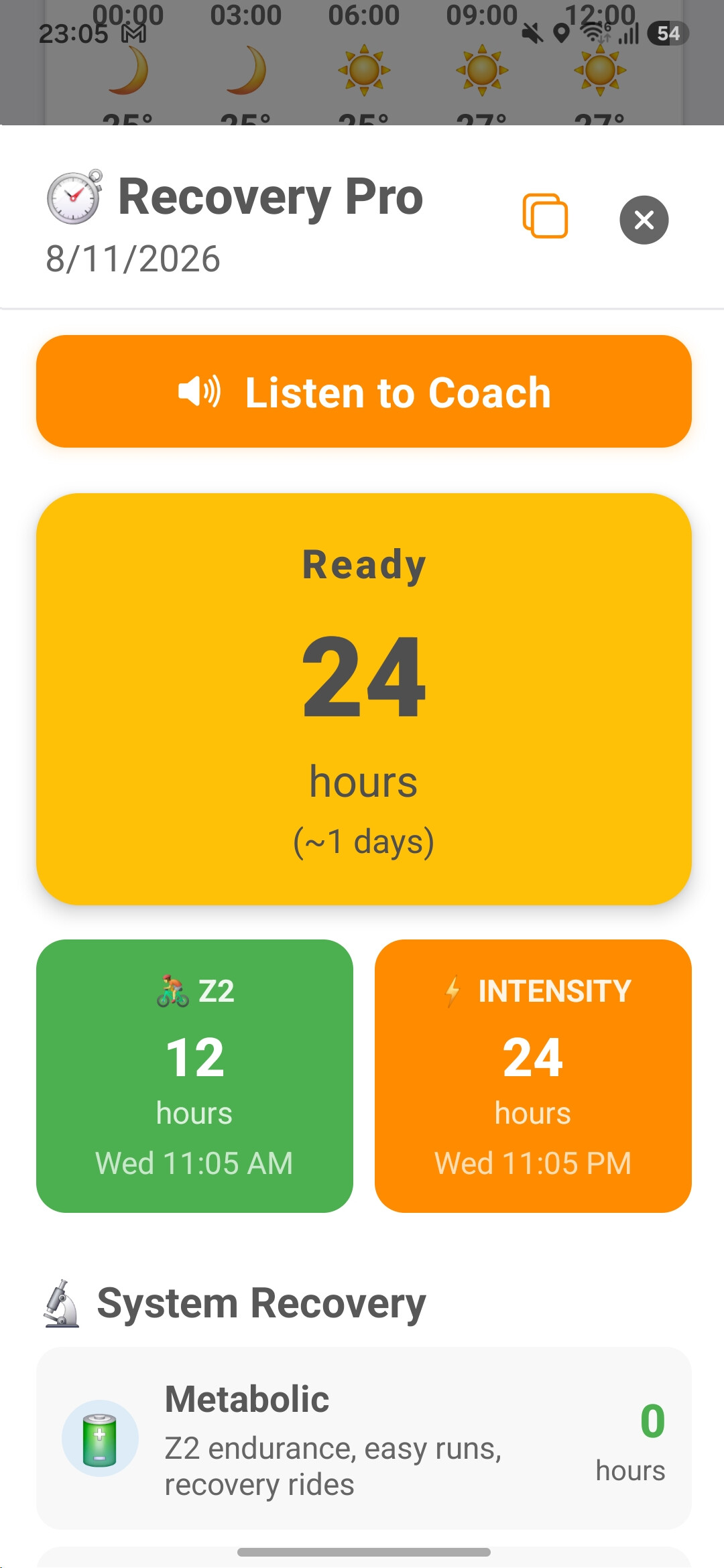
 Recovery Pro
 24 hours
 Z2: 12hours |
  Intensity: 24hours
 Constraints:
 Run — Z2, 90% of threshold, 154 bpm
 No Z4+ efforts
 Hormonal recovery is the limiting system, so the safest approach is light activity recovery today. Z2 is allowed in 12 hours, and higher intensity is allowed in 24 hours. The completed swim fits a light activity recovery day, so no extra structured work is needed. Keep the day Z1-Z2 only and avoid Z4+ efforts until the next intense workout window.